
Energy
People who keep the lights on.
Field and plant technicians, control room operators, transmission and distribution, renewables operations and HSE. Outage support, a project ramp, or the permanent hire a site depends on.
- 6 functions
- from field and plant operations through control room, renewables and safety
- Safety verified
- qualifications and site requirements checked before anyone travels
- Outage ready
- crews mobilised against a planned outage window rather than a vague start date
Energy
Safety qualification decides who can start.
We staff generation, transmission and distribution, renewables and utilities operations: field technicians, plant operators, control room and dispatch, engineering support, and health and safety.
Energy work is scheduled around outages, seasons and compliance deadlines, which means dates are fixed long before people are. That is an advantage if the staffing plan starts early enough.
The gating item is almost always qualification rather than skill. Safety training, site specific requirements and medical or drug screening decide whether somebody can be on site on the Monday you need them.
Functions
What we actually recruit for.
Pick one and you get what they actually produce, the seniority we fill, and the tools and standards a screen has to cover.
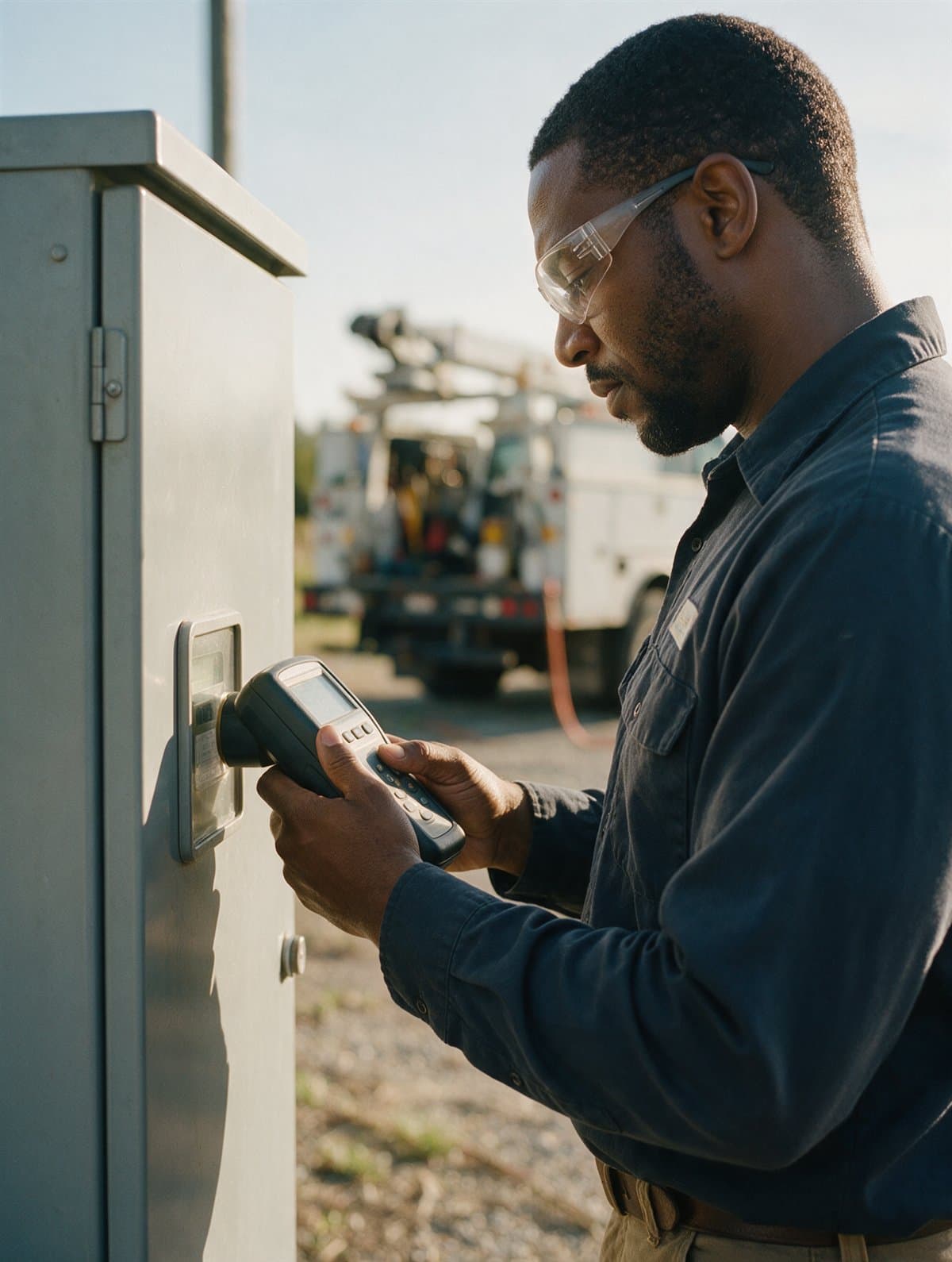
Preventive maintenance, callouts, metering, inspections and the driving that comes with a territory.
- Seniority we fill
- Field technician through to field supervisor
- Tools
- Diagnostic equipmentMobile work managementGIS mapping
- Standards
- OSHA 10 and 30Confined space where relevantDriving record requirements
Preventive maintenance, callouts, metering, inspections and the driving that comes with a territory.
- Seniority we fill
- Field technician through to field supervisor
- Tools
- Diagnostic equipmentMobile work managementGIS mapping
- Standards
- OSHA 10 and 30Confined space where relevantDriving record requirements




The vocabulary
What we verify and recruit against.
Qualification and medical clearance decide the start date far more often than experience does. Both are checked first.
Systems
- SCADA
- EMS and DMS
- Maximo
- GIS
- Outage management
- PI historian
Safety qualifications
- OSHA 10
- OSHA 30
- NFPA 70E
- Confined space
- Working at height
- First aid and CPR
Standards
- NERC CIP awareness
- API where applicable
- Lockout tagout
- Permit to work
Checks we run
- Driving record
- Drug and alcohol screening
- Medical and fit for duty
- Background check
In energy work the qualification decides the start date, not the interview. Verify it before anybody books a flight.
Screening
How we screen for site work.
Energy screening is sequential. Qualification, then medical and driving, then capability. Doing it in that order stops people being mobilised who cannot legally be on site.
- 01
Qualifications verified first
Safety training, site specific requirements and any regulatory qualification, checked with the issuing body before travel is booked.
- 02
Medical, driving and screening
Fit for duty, drug and alcohol screening and the driving record, because for field roles the licence is the job.
- 03
The environment described plainly
Outdoors, heights, confined spaces, weather, shift length, camp accommodation and travel. Said honestly before anybody accepts.
- 04
Technical capability tested
Equipment and system familiarity, and for protection and relay work a short set of discipline questions from your team.
- 05
A reference on safety behaviour
A supervisor who can speak to how they behave when a shortcut is available and nobody is watching.
Straight answer
Where the market is actually tight.
What our recruiters see running these searches. Experience rather than a guarantee.
| Role | What the market looks like | Realistic shortlist |
|---|---|---|
| General site and support labour | Available in most regions. | Days to a week |
| HSE coordinators | Steady, though contractor safety management experience narrows it. | Two to three weeks |
| Plant mechanics and operators | Regional. Availability follows the local industrial base closely. | Two to four weeks |
| Wind and solar technicians | Tight, and travel tolerance decides it as much as skill. | Three to four weeks |
| Control room operators | Difficult. Twelve hour rotating shifts narrow the field sharply. | Four to six weeks |
| Relay and protection technicians | The hardest energy hire we run, in nearly every market. | Six weeks and up |
Outage staffing should start months out, not weeks. The window is fixed, the qualified population is small, and everyone in the region wants them in the same fortnight.
Shapes
Three shapes this usually takes.
Energy demand is planned, seasonal or storm driven, and each needs a different lead time.
Outage and turnaround
A crew against a fixed window.
- When it fits
- Planned outages, turnarounds, major maintenance, commissioning.
- The arrangement
- Contract for the window, mobilised with qualifications verified in advance.
Project ramp
A team across several disciplines for a build or a programme.
- When it fits
- New generation, a substation programme, a renewables portfolio, a metering rollout.
- The arrangement
- Project and team staffing, onshore, with one point of contact.
The permanent hire
The people a site cannot operate without.
- When it fits
- Control room operators, relay technicians, HSE leads, maintenance supervisors.
- The arrangement
- Direct hire, or contract-to-hire where shift tolerance needs proving.
Before you call
What to have ready before you call.
The qualification list and the date are the two things that shape everything else.
- Site specific safety qualifications, and who provides the training
- Shift pattern, rotation length and whether accommodation is provided
- Travel percentage and whether a driving record requirement applies
- Medical, drug screening and fit for duty requirements
- The outage or project window, with the mobilisation date
- The rate, including any per diem or travel allowance
Open roles
A sample of energy roles we fill.
Questions
Before you call.
Months rather than weeks. The window is fixed, the qualified population is small and every operator in the region wants the same people in the same fortnight. Early planning is the whole game here.
Planning an outage?
Tell us the window, the qualifications and the shift pattern. The earlier the conversation, the better the crew.